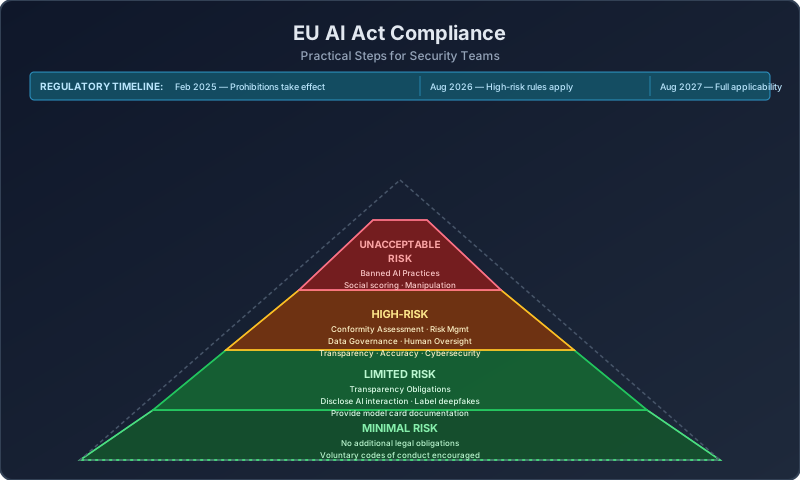
EU AI Act Compliance: Practical Steps for Security Teams
The EU AI Act’s compliance deadlines are approaching, and organizations deploying AI systems in the European market need to act now. The Act creates a risk-based framework that imposes different requirements depending on an AI system’s classification — from minimal obligations for low-risk systems to extensive requirements for high-risk ones.
Understanding Your Classification
The first step in EU AI Act compliance is determining which category your AI systems fall into. Unacceptable risk systems are banned entirely — these include social scoring by governments, real-time biometric surveillance in public spaces, and manipulative AI systems. High-risk systems face the most stringent requirements and include AI used in critical infrastructure, education, employment, law enforcement, and access to essential services.
Limited risk systems require transparency obligations — users must know they’re interacting with AI. Minimal risk systems face no additional regulatory requirements beyond existing law. Most enterprise AI applications fall into the limited or high-risk categories.
Security Requirements for High-Risk Systems
For high-risk AI systems, the Act requires a comprehensive security program. Organizations must establish a risk management system that identifies, evaluates, and mitigates risks throughout the AI system’s lifecycle. This must be documented and maintained for regulatory inspection.
Technical documentation requirements are extensive. Organizations must document the system’s intended purpose, the data used for training, the performance metrics, the security testing conducted, and the ongoing monitoring procedures. This documentation must be detailed enough that a regulator can assess compliance without access to the system itself.
Record-keeping and logging are mandatory. High-risk AI systems must automatically log events during operation, including input data, output data, and system behavior. These logs must be retained for a period appropriate to the system’s context.
Practical Compliance Steps
Security teams should start with a comprehensive inventory of all AI systems in their organization and classify each one according to the Act’s definitions. Then establish the risk management framework required for high-risk systems — this covers the full lifecycle from design through deployment and monitoring. Implement the logging and documentation requirements, and ensure that transparency obligations are met for limited-risk systems.
The documentation and governance practices familiar from established security frameworks — including those covered by waap-security.uk — provide a useful starting point. The isolation principles of microsegmentation.uk are directly applicable to the infrastructure segregation that supports compliance.
Want to go deeper? Check out these resources on Amazon:
As an Amazon Associate I earn from qualifying purchases.